
GEMTEX RESEARCHERS PUBLICATIONS
Update
December 2025

Effective combination between silver and nickel oxide nanoparticles: From characterization to catalytic reduction of 4-nitrophenol
N. Bouazizi, M. N. Morshed, V. Nierstrasz, S. Bouazizi, A. El-Achari, C. Campagne and J. Vieillard
Journal of Molecular Structure –
The combination of organic and inorganic moieties resulted in advantageous materials with excellent physicochemical properties and reduced production costs. These organic-inorganic composites exhibited properties suitable for a large range of applications. This study introduces a simple strategy that combines Ni(OH)2 and Ag nanoparticles via thiol organic molecules. Doi.org/10.1016/j.molstruc.2025.144400

Two‐Stage NLP‐Driven Framework for Interval‐Valued Carbon Price Prediction Using Sentiment Analysis and Error Correction
D. Sha, X. Zeng, A. Johannssen, R. Wang and Kim P. Tran
Journal of forecasting.
Accurate predictions of carbon prices are essential for efficient administration and stable operation of carbon markets. Previous studies have mostly focused on point or interval predictions based on point-valued data. These approaches insufficiently capture the full extent of market volatility. In contrast, interval-valued data, containing maximum and minimum values, enable more meaningful interval-valued predictions and thus provide a more comprehensive assessment of uncertainty.
Doi.org/10.3390/su17188411

Optimizing Laundry for Sustainability: Balancing Washing Efficiency and Environmental Impact in the Clothing Use Phase
T. Xia, R. Benkirane and A. Perwuelz
Sustainability 17.
This study proposes a research framework that integrates the Response Surface Methodology (RSM) and Life Cycle Assessment (LCA) methodology to optimize washing parameters for better washing efficiency with less environmental impact in the clothing use phase. A series of laundry experiments were conducted to simulate household laundry, and an environmental impact assessment was conducted based on the experimental data.
https://lilloa.univ-lille.fr/handle/20.500.12210/131618Https://Doi.org/10.3390/su17188411

Highly reliable shear sensitive triboelectric smart textile for intelligent gait analysis toward early detection and offloading rehabilitation of diabetic foot ulcers.
X. Wang, W. Guo, Y. Zhao, X. Sun, Z. Jin, X. Jiao, C. Chuai, X. Tao, X. Zeng, P. Xu, H. Sun and Q. Sun
Nano Energy 146
This paper proposes a shear stress sensitive triboelectric smart textile sensing system for intelligent gait analysis. The system comprises a smart insole featuring a triboelectric smart textile array in high-stress foot regions, a flexible printed circuit board (FPCB) for signal transmission, and a self-attention based multi-modal recognition software. An interlocked hill structure, inspired by mammalian skin, is integrated into the triboelectric smart textile.
Doi.org/10.1016/j.nanoen.2025.111528
Green material product demand analysis: A theory of planned behavior model incorporating environmental knowledge factorsM. Y. H. Zhou, Y. Hong, X. Y. Zeng and X. Q. Dai
Textile Research Journal
Promoting the consumption of products made from green materials is a crucial strategy for achieving clean production. However, there is often a misalignment between green materials and the product design, leading to suboptimal applications. Conducting consumer demand analysis for green-material-based products and pursuing demand-driven green product development can enhance the recognition of these materials, which is essential for sustainable consumption.
Doi.org/10.1177/00405175251355223

Crystal structure, thermal, rheological and mechanical properties of self-reinforced melt-spun high- and low-density polyethylene blends
M. Yousfi, I. Castro-Cabrera, A. Cayla, F. Salaün, P. Sotta, O. Boyron, C. Fernandez-De-Alba, C. Parajua-sejil, C. Samuel, V. Truchot and M.-F. Lacrampe
Polymer – Volume 339, 21 November 2025, 129123
Self-reinforced melt-spun single-polymer composites (SPCs) from low-density polyethylene (LDPE) and high-density polyethylene (HDPE) have been successfully produced through melt spinning method. The molecular weight characteristics of each component and their corresponding blends (at weight ratio of 80/20 and 50/50) have been investigated using High Temperature Size Exclusion Chromatography. Https://Doi.org/10.1016/j.polymer.2025.129123

Chitosan for new in situ self-assembly way to arrange Cu and Ni nanoparticles: useful configuration with high catalytic activity
Nabil Bouazizi, Mohammad Neaz Morshed, Vincent Nierstrasz, Salah Bouazizi, Ahmida El-Achari, Christine Campagne & Julien Vieillard
Environmental Science and Pollution Research – Volume 32, pages 21358–21375, (2025)
The stabilization of metal nanoparticles is a key factor in various applications, but its wide use requires the development of effective and advanced materials. For the first time, this work demonstrates that in situ self-assembly of copper (Cu) and nickel (Ni) nanoparticles (NPs) via chitosan (Ct) allowed the formation of a new matrix Cu-Ct-Ni.
Doi.org/10.1007/s11356-025-36833-2
Update
January 2025
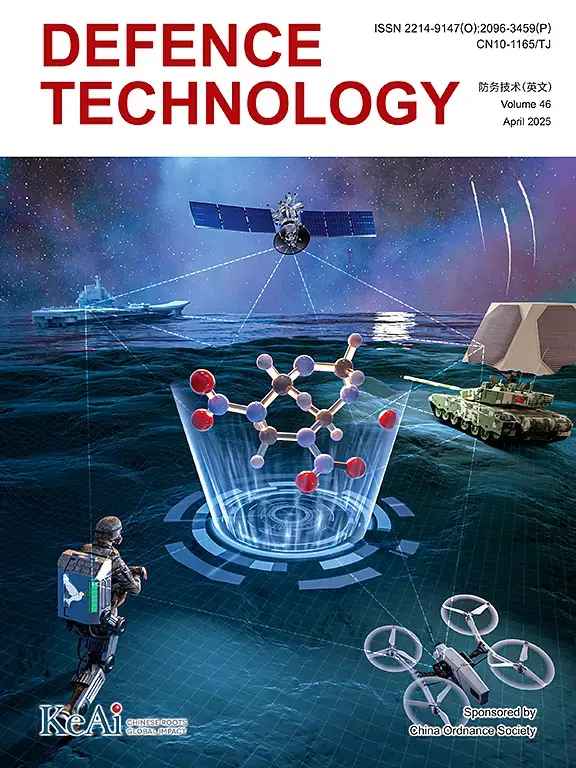
Experimental investigation on dynamic stab resistance of high-performance multi-layer textile materials
Mulat Alubel Abtew, François Boussu, Irina Cristian, Bekinew Kitaw Dejene
Stab-resistant textiles play a critical role in personal protection, necessitating a deeper understanding of how structural and layering factors influence their performance. The current study experimentally examines the effects of textile structure, layering, and ply orientation on the stab resistance of multi-layer textiles. Three 3D warp interlock (3DWI) structures ({f1}, {f2}, {f3}) and a 2D woven fabric ({f4}), all made of high-performance p-aramid yarns, were engineered and manufactured.
Doi.org/10.1016/J.dt.2025.01.010

Durable Textile Dyeing/Printing Using Natural Indigo Dyes and Leaves, and Mayan-Inspired Blue Indigo Pigments. Colorants, 4(1).
Behary, N., & Volle, N.
Indigo leaves from various plant species are sources of dyes/pigments, not fully exploited for making sustainable textiles. Blue indigo vat dye extracted from indigo leaves yields high wash color fastness but fades slowly with light, and is not easily used for direct printing. Indigo leaves can be used to produce textiles of various color shades, while light-resistant Mayan-inspired hybrid pigments have not yet been used for textile coloring.
Https://Doi.org/10.1016/J.dt.2025.01.010

Reliability modeling of tensile properties in recycled carbon fibers: A comparative fit of statistical distributions pre- and post-textile processing
Jean Ivars, Kim Phuc Tran, Ahmad Rashed Labanieh, Damien Soulat
Due to their extensive use in the aerospace, automotive, wind energy, and sports industries, the recycling of carbon fiber composites has become increasingly important. Characterization of the tensile properties of these recycled fibers is essential, using single fiber tensile tests that provide data on tensile strength, elongation at break, and tensile modulus. This study compares four statistical distributions—2-parameter Weibull, 3-parameter Weibull, Normal, and Lognormal—to fit tensile data from two batches of recycled carbon fibers: one after recycling, and the same type of fiber after a further carding process.
Https://Doi.org/10.1016/J.mtcomm.2025.111818
Influence of the Thermoplastic Fiber Ratio on the Mechanical Properties of Recycled Carbon Fibers During the Carding Process
Jean Ivars, Ahmad Rashed Labanieh and Damien Soulat
DThis study investigates the impact of carding and blending recycled carbon fibers (rCF) with crimped thermoplastic polypropylene (PP) fibers on the mechanical properties of rCF, using a Weibull statistical approach. Tensile properties of rCF were evaluated before and after carding with varying rCF/PP blend ratios (100/0%, 85/15%, 70/30%, and 50/50%).
Https://Doi.org/10.3390/Ma18020302

SVDD control charts based on MEWMA technique for monitoring compositional data
Thi Thuy Van Nguyen, Cédric Heuchenne, Kim Duc Tran, Guillaume Tartare, Kim Phuc Tran
Monitoring compositional data (CoDa) using control charts has become increasingly important in Statistical Process Control (SPC). This study introduces two approaches for CoDa monitoring, utilizing support vector data description (SVDD) control charts in conjunction with the multivariate exponentially weighted moving average (MEWMA) technique, specifically focusing on Phase II monitoring processes.
Https://Doi.org/10.1016/J.cie.2025.110865

A new omnibus SPRT chart for monitoring process mean and variability based on the average number of observations to signal
J.W. Teoh, W.L. Teoh, XueLong Hu, K.P. Tran, & D.G. Godase
In this article, we propose two enhanced optimization designs for the OSPRT chart based on the average number of observations of signal (ANOS) and expected value of the ANOS (EANOS) metrics under deterministic and unknown shift sizes, respectively.
Https://Doi.org/10.1080/00949655.2024.2417253
Investigating the effects of cognitive scenarios between real fabric and fabric visual representations
Bo Xing, Qingqing Shao, Xianyi Zeng, Ludovic Koehl, and Jun Wang
The present study delves into the cognitive aspects of fabric hand evaluation, particularly under varying scenarios of real touch and visual representations (image, video). Conducted within a cognitive psychology framework, the study used a two-step rating-based double-faced applicability (DFA) test across a panel of 30 experts who evaluated 101 textile samples using 20 semantic differential descriptors.
Https://Doi.org/10.1177/00405175241296522

Study and restoration of the costume of the HuoLang (Peddler) in the Ming Dynasty of China
C. Zhu, Y. Y. Gao, J. P. Wang, Xianyi Zeng, Pascal Bruniaux, K. X. Liu
This study looks at two aspects of ancient Chinese genre painting to interpret the more realistic ancient shopping scenes in the painting of the peddler in spring scenery in the Ming Dynasty, namely, the Ming spring scene and the characters’ costume image features.
Https://Doi.org/10.1515/Aut-2023-0053

Deformability and preforming characterization of nonwoven fabrics
Ahmad Rashed Labanieh, Damien Soulat, Fatma Omrani
Nonwoven fabrics, known for their mechanical and acoustic properties, have gained attention in various industries, including automotive applications. The use of natural fibers or recycled carbon fibers (rCF) in nonwoven structures offers a cost-effective and sustainable solution.
Https://Doi.org/10.1016/B978-0-443-21578-0.00005-6